
Flipkart-backed super.money is on an expansion spree and plans to expand its range of offerings in credit and wealth management after launching its operations in July this year. The Bengaluru-based fintech company is on track to roll out credit products such as credit on Unified Payments Interface (UPI), unsecured credit cards, and personal loans within the first half of the next calendar year (2025).

Link your UPI app to a separate bank account or wallet that has only a limited sum.

Mobile wallet adoption is surging in India and swiftly becoming a primary payment option, surpassing traditional methods like cash and cards. Over the next few years, payments via mobile wallets in India are likely to surpass the Rs 531.8 trillion mark in 2028, witnessing a compound annual growth rate (CAGR) of 18.3 per cent between 2024 and 2028, according to GlobalData - a London-based leading data and analytics company. The value of mobile wallet payments in India, as per a GlobalData report, grew at a CAGR of 72.1 per cent between 2019 and 2023 to reach Rs 202.8 trillion ($2.5 trillion) in 2023.

Dismissing the petitions, a bench headed by Chief Justice Satish Chandra Sharma said Google Pay is "mere third-party app provider" which requires no authorisation from RBI under the Payments and Settlement Systems Act.

Facebook-owned messaging platform WhatsApp has been granted permission to double its user base for the payments service to 40 million by the National Payments Corporation of India (NPCI). WhatsApp has a total user base of 400 million and the development will help the platform compete better with entrenched rivals like Google Pay and Phone Pe. The US-based company had been eyeing the payments opportunity for long, but data localisation requirements had initially led to a delay.

'A credit line on UPI is going to make banks think about credit fundamentally as they digitise the credit process entirely.'

Experts say the new guideline is likely to hurt foreign players more, especially card companies such as Visa, MasterCard and American Express who process and store credit card transaction data outside of India.

In the first such collaboration for India, the country's flagship payments platform, the Unified Payments Interface (UPI), and Singapore's PayNow payment system have launched a real-time cross-border payment linkage system. The linkage, which was launched by Prime Minister (PM) Narendra Modi and Singapore's PM Lee Hsien Loong on Tuesday, was kicked off by a live cross-border transaction between Reserve Bank of India Governor Shaktikanta Das and Monetary Authority of Singapore managing director Ravi Menon, using mobile phones.

'The focus needs to shift towards the ability to collect payments, particularly in tier-3 to tier-4 areas where acceptance is still lacking.'

The transition to UPI-based ATMs will be gradual, and consumers will not immediately switch to using standalone UPI ATMs overnight.

These top two apps account for more than 78 per cent of the UPI market in terms of volume of transaction, and 86 per cent of the market by value of transactions in December.
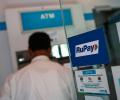
RuPay is working on how to increase offers to customers. It is also focused on technology innovation in the card payment system.

Unified Payments Interface (UPI) clocked over 6 billion transactions in July: the highest ever by India's flagship digital payments platform since its inception in 2016. UPI reported 6.28 billion transactions amounting to Rs 10.62 trillion, according to data released by the National Payments Corporation of India (NPCI), which operates the platform. Month-on-month, the volume of transactions was up 7.16 per cent and value increased 4.76 per cent.

The company was awaiting clarification from the Reserve Bank of India on data storage before it took a final call on data localisation.
While it took UPI three years to reach a billion transactions in a month, the next billion came in just a year. Digital payments, especially UPI, saw increased adoption in 2020 due to the Covid-19 pandemic.
Facebook-owned messaging service WhatsApp has secured regulatory approval for launching its digital payment platform -- WhatApp Pay -- in a phased manner, close to two years after the US-based company's pilot run.

Tokenisation is the process of replacing debit and credit card numbers with a set of characters or tokens.
An analysis for the first eight months of CY18 shows that the value of RuPay and UPI transactions constitute 65.2 per cent of all transactions done through debit and credit cards, in value terms, across retail outlets by the end of August.

'Hacking of an ID or an account will have the same impact on a user in a city and one in a small town.' 'Security is like a railroad, you create it to last for every customer.'

The increasing involvement of Big Tech in the financial system could give rise to concentration risk and there are potential spillovers, which call for closer attention, Reserve Bank of India (RBI) Governor Shaktikanta Das said on Tuesday. "...enormous amounts of consumer data is being generated and leveraged upon by a few entities (the so-called Big Tech) by virtue of their huge customer base. "Such developments raise concerns on concentration risk and potential spillovers as their level of engagement with the financial system strengthens in the years to come," Das said at the Global Fintech Fest 2022.

Capital markets regulator Sebi on Wednesday streamlined the payment of processing fee through the Unified Payments Interface (UPI) system for shares applied for and allotted during an initial public offering (IPO). In addition, the regulator has devised a new reporting format for capturing the data of all ASBA (Application Supported by Block Amount) applications unblocked by Self Certified Syndicate Banks (SCSBs) and their corresponding date of actual unblock. The new format has been put in place after reviewing the performance of SCSBs on timely unblocking of application amounts and feedback received from market intermediaries, Sebi said in a circular.

The recent Reserve Bank of India (RBI) norms on tokenisation services, which will be offered by card networks, are likely to result in merchants and payment aggregators incurring a cost as they have to pay a fee to the networks. The merchants and the payment aggregators, in turn, may pass on the cost to the customers. The norms, which were issued by the banking regulator released on September 7, allow card networks like Visa and Mastercard to offer the tokenisation service.
In this month itself, UPI can hit 2 billion transactions and by March 2021, it should reach 2.15 billion transactions in a month.

The Unified Payment Interface could propel banking into a new era

Nandan Nilekani talks about moving towards a cashless economy and freedom of Internet, among others

Uncertainties on account of COVID-19 pandemic have increased the demand for currency notes not only in India but across the globe, official sources said, dismissing the criticism that demonetisation has failed to reduce cash in the economy. Government sources said that growth of the digital payments system post-demonetisation will ultimately curb the dependence on cash. Official data points out a jump in digital payments through different modes, including plastic cards, net banking and Unified Payments Interface (UPI).

Data processing compliance is the main reason behind the delay. The government, on several occasions, has made it clear that Indian financial data needs to be stored exclusively onshore and if it is processed outside, it needs to be brought back in 24 hours.

With vehicular activity picking pace in May, toll collection also saw a huge uptick. Fastags posted an impressive jump of more above 400 per cent in transaction count at 55.17 million, and an over-300 per cent jump in value at Rs 1,142 crore.

Rapid strides in digital payments notwithstanding, the Indian economy will likely remain cash-dependent for many years to come, at least that's what the automated teller machine makers and cash logistics companies are betting on. After growing at over 20 per cent for most of 2020, currency in circulation growth fell to 8.5 per cent as of October 29 this year, shows data from the Reserve Bank of India (RBI). The reason for the steep rise in currency last year was the uncertainties related to the Coronavirus (Covid-19) pandemic, where people preferred to hoard cash to meet exigencies.

Top officials in key ministries, including finance and IT, are of the opinion that a sensitive payments system such as UPI should not be on a platform whose security is possibly compromised.

Consumers can effectively make payments using UPI and other debit cards, credit cards and internet banking across 120 banks and over 120 billers, Xiaomi said.

This year, PhonePe is focussed on bringing more partners across categories, including travel, commute, food, hyper-local, retail and entertainment on the platform.

The bank's response came to a clarification sought by stock exchange on recent reports on debit cards blocking in the wake of suspected data breach

BBPS allows you to pay electricity, telephone, water supply, gas and DTH bills. Its scope will be expanded to include other payments like school and university fees, government taxes, insurance premiums, mutual fund investments, even credit card bills.

But what do banks gain by opening their apps for all? The answer -- rival bank's customers under their fold.

The temptation to get into businesses that are hot is perhaps too great for any politician, no matter what his public slogans are. Nehru plunged into hot sectors of his time -- engineering and iron and steel. Modi has plunged into digital payments -- the hot sector of his time, notes Debashis Basu.

Unified Payments Interface launched to simplify mobile banking.

Employers are now looking to hire professionals who can demonstrate their skills rather than reel off a catalogue of undirected theoretical qualifications.

Promising swift action on the debit card data compromise issue, Economic Affairs Secretary Shaktikanta Das on Friday said there was no need to panic over the feared security breach that affected over 32 lakh cards.

2017 saw the highest-ever mobilisation by way of IPOs of close to Rs 700 billion. The momentum is expected to continue this year as well.
